Any Marketing 101 class will espouse the values of the 4 P’s of Marketing, or the “Marketing Mix”, consisting of Product, Place, Price and Promotion. However, the most important P may be one that isn’t traditionally included in this list: Perception.
7.26.2014
4.22.2014
Creating Breakthrough Innovations
What makes a product a breakthrough innovation? First, a breakthrough product is typically a commercial success. But plenty of products are commercially successful; a breakthrough is much more than that. A true breakthrough changes the market landscape in some significant way. Breakthrough products disrupt markets and business models and change the way people live. They change behaviors and lifestyles. In fact, they often change the world as we know it. Think iPhone, iPad, YouTube, 3D printers, Facebook, etc.
2.19.2014
How "Growth Hacking" Can Help You Rapidly Scale Your Business
"Growth hacking" is a business and marketing concept that has been building momentum, particularly among tech start-ups. Essentially, growth hacking is the concept of scaling a company or product quickly by making data-driven decisions. It also dictates how the product or company is marketed to potential customers. Growth hacking eschews traditional marketing channels for low cost "guerilla" tactics that promote rapid growth. A key tenet of growth hacking is that it encourages businesses to take an outside-the-box approach to marketing, taking all aspects of operations into consideration when identifying growth opportunities.
1.14.2014
Using Data to Optimize Your Marketing Efforts
An ongoing criticism of social media marketing is that it offers an uncertain ROI. However, measuring ROI has always been a central challenge for marketers. Whether you work in marketing or not, you have probably heard some variation of the often quoted adage, "Only half of marketing works. The problem is, we don't know which half." Identifying which marketing efforts are the most effective has long been a significant hurdle for marketers, inhibiting our ability to optimize (or justify) our efforts.
12.05.2013
Creating Brand Advocates
Advertising can be an effective way of communicating your product or service, but the average consumer is reluctant to trust traditional advertisements. Referrals and word of mouth are much more effective ways to get your message heard because these methods come from trusted sources: friends and family. The best way to ensure positive word of mouth about your company is to create positive experiences for your existing customers. This is especially important in the age of social media, when every individual has the ability to communicate with hundreds, if not thousands, of people with a couple taps on their phone or clicks of their mouse.
11.05.2013
Social media has redefined branding
Before social media, a company shaped its brand primarily through advertising. It was easy to control the message and project the desired brand image. Since the advent of Facebook, Twitter, Instagram, Google Plus, Pinterest, etc., the game has changed dramatically. Companies now have a way to interact with customers and shape their brand in real-time. This can be either good or bad, depending on the company's approach to branding and marketing. Companies who were comfortable with and preferred a tightly controlled brand message are having a difficult time adapting to the new media landscape. On the other hand, companies who prefer a more customer-focused approach now have countless tools at their disposal.
10.02.2013
How to make your company part of the conversation
It's no secret that people prefer to read about relevant topics. When a headline mentions a recent news item or a trending topic, it is much more likely to be read. Your company may not always be in the news, but it is relatively easy to become part of the conversation. In fact, leveraging current events and interesting news items is one of the best ways to generate press for your business. Many PR strategies focus on what the particular company is doing, but it is often more effective to determine how your business can fit into what is already being talked about.
8.28.2013
Branding is more than a buzzword
Along with "innovation" and "disruptive", branding has become one of the most overused words in business. This is unfortunate since branding is such an integral part of any company. The concept of branding may seem like marketing fluff to many who believe that the products a company produces or the services they provide are the only things that matter. However, branding defines a company's identity. This doesn't just refer to the perception that others have of the company (although that is certainly an important aspect of branding), but the brand also serves as a guiding force internally. A clear brand identity sets the tone within a company, guiding operational decisions, customer service policies and company culture.
7.24.2013
Blue Ocean Strategy
Most business strategies focus on how to beat the competition. It seems obvious that the success of any business relies on its ability to outperform its rivals. However, Renée Mauborgne and W. Chan Kim present another option in their widely-acclaimed business book "Blue Ocean Strategy". The book argues that you can actually make competition irrelevant by creating uncontested market space, or "blue oceans". Although finding these opportunities is certainly easier said than done, the book offers a comprehensive outline of the practices other companies have followed to create their own blue oceans.
6.24.2013
Focus on your customers instead of your products
What business are you in? The way you answer that question will determine the long term success of your brand. If you answered that question by naming the product you sell, it is critical to expand that view of your business. Instead of focusing on your product, focus on your customers' needs. Whatever product you offer, you are really in the business of fulfilling certain needs. If necessary, shift your focus to meet these needs even if that means abandoning your product. In fact, if you focus on only the product, you are bound to become obsolete.5.20.2013
B2B + B2C = B2P
It is often assumed that B2B and B2C businesses must approach marketing very differently and utilize completely different strategies. While B2B marketing extols the benefits provided to a company and B2C is aimed at the individual consumer, when it comes down to it, you are still marketing to a person.
4.22.2013
What Bottled Water Can Teach You About Marketing
Nowhere is the power of branding and marketing as clear as it is in the bottled water industry. Despite virtually zero product differentiation, bottled water has become a billion dollar business with a wide range of prices, many distinct brands and strong brand loyalty. Brands like smartwater, Fiji, Voss, and plenty others have effectively found a niche within an undifferentiated market.
This industry represents a microcosm of virtually every other market. Without any product differentiation, these companies have come to rely on branding as the only way to stand out. It is the ultimate test of branding, illustrating how powerful marketing and branding can be to influence consumer behavior.
3.20.2013
2.13.2013
The Importance of Building a Strong Brand
A strong brand is essential for connecting with consumers and helping your company stand out from the crowd. However, marketers often approach each advertising campaign, website or piece of sales collateral as individual, unconnected items instead of tying them together to form a cohesive brand image. Each marketing item should fit together like a puzzle and solidify your overall brand. It's this collective whole that defines how your company is perceived by consumers. This brand image should always be taken into account when implementing any new marketing project or your carefully crafted brand will erode over time.
1.15.2013
Be Disruptive, or Risk Being Disrupted
The media loves to highlight "disruptive" companies and technologies - organizations that are shaking up the status quo in their respective industries. However, there are many businesses out there who are terrified of this type of change. If you are one of those that see change as a threat, then you need to learn how to embrace disruption if you want to thrive, or even survive.
12.12.2012
"Get Emotional" - How to Build an Emotional Bond With Your Customers
Build an emotional connection with your customers. This is what has made Apple so successful. While Samsung's recent series of humorous commercials point out the irrational level of loyalty many consumers feel towards Apple, there is a reason why many people refuse to buy a phone (or tablet or computer) from anyone else. It's not just the widely acclaimed Apple "ecosystem", although that is a strong retention tool. It's not just the focus on the design of the software and hardware, although that draws many to the brand. What really sets the company apart is their ability to elicit a personal connection with their customers that is unmatched among their competitors.
11.08.2012
What's in it for me?
Your marketing message should always be highlighting how your product will help your customers. Although it should be obvious, this marketing fundamental often gets forgotten. All of your promotional material should answer the customer's most salient question: "What's in it for me?"
10.01.2012
The Personal Touch
In this digital age, when emailing, texting, tweeting and posting on a friend's Facebook wall are the primary ways of communicating for most people, a personal touch can go a long way. This especially holds true for companies that offer a high ticket product or service. When you're making a sales call, actually make a phone call. Even better, set up an in-person meeting or take your prospect out for lunch. That doesn't mean you shouldn't leverage more technological means of communication; a periodic email to check in with your current customers or to follow up on a recent meeting is always a good idea, and if you can connect with them via social media, go for it. But it's important not to forget the power of actual human contact.
8.28.2012
Why Controversy Isn't A Bad Thing
When most people think of "controversy", they have a negative connotation of the word. Controversial topics are taboo, and controversy is thought of as something to be avoided. However, people are also attracted to controversy. It makes ordinary things more interesting, and more importantly for businesses, it garners attention and gains exposure. Just like the saying goes, "There is no such thing as bad press" (up to a point, of course).
7.16.2012
How to Utilize Permission Marketing
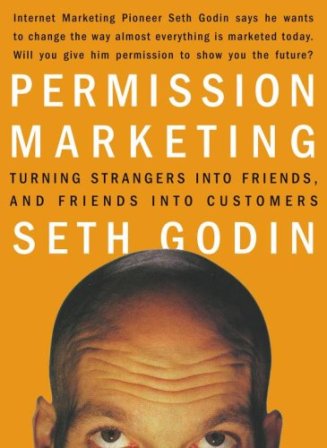
I recently finished Seth Godin's book "Permission Marketing". Written in the pre-social media days, the book was way ahead of its time. In short, it's all about obtaining increasing levels of permission from existing and prospective customers in order to more effectively build a relationship with them. For example, a low level permission may be a Facebook like or a Twitter follow, while a slightly higher level could be providing an email address or other contact information, with another level being the completion of a survey on an individual's interests or preferences. As you learn more about these consumers and earn higher levels of permission, you can then target them with sales pitches or ads that are more relevant, anticipated and personal.
Subscribe to:
Posts (Atom)


